
Community gardens have quietly reshaped many European cities over the last two decades. They turn vacant plots, rooftops and pocket-parks...
Social exclusion and difficult access to the labour market affect migrants, especially young women. SUCCSEEDS project is aimed at supporting the social inclusion and active citizenship of vulnerable young migrant women by fostering entrepreneurship through Community Gardens, promoting their environmental awareness and personal, social and learning-to-learn skills. For this, youth workers and community educators will be trained in innovative methods to engage these women with the project’s aim.
To achieve this, the project defines the competence framework to be worked by youth workers and community educators, so they can boost social inclusion and active citizenship of young migrant women by fostering entrepreneurship through Community Gardens, produces digital educational tools and methods to support competence development of project users, so they can guide project beneficiaries towards action and project’s objectives and tests those tools in real educational contexts.

Community gardens have quietly reshaped many European cities over the last two decades. They turn vacant plots, rooftops and pocket-parks...

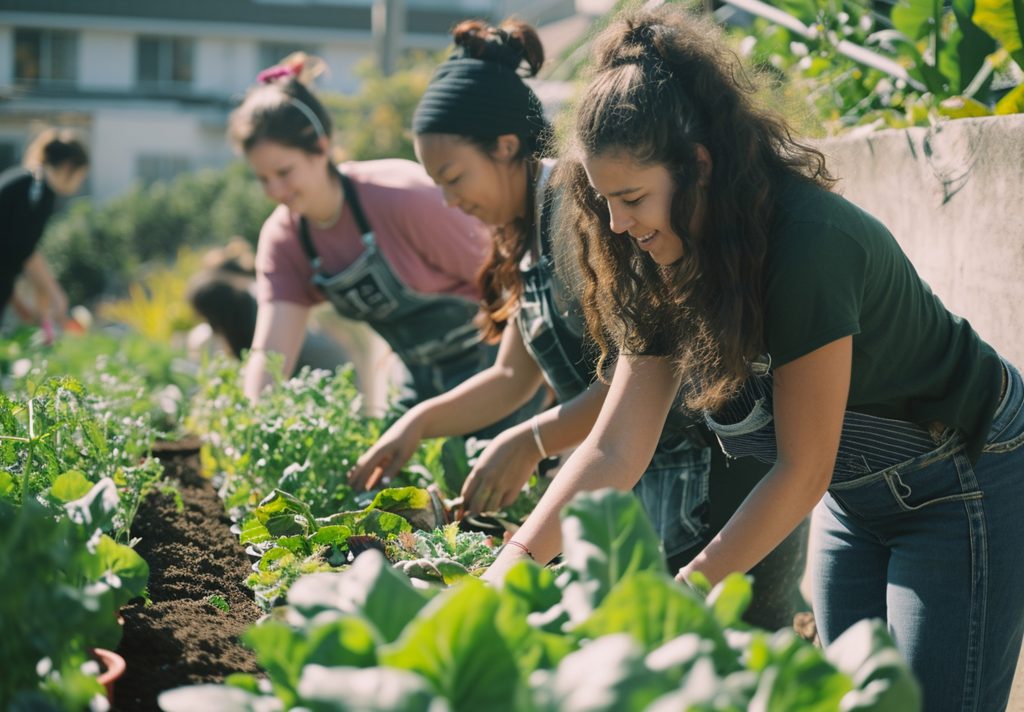
Community gardens produce fresh vegetables, herbs and fruit that supplement household diets, provide educational food-growing experiences, and sometimes supply local...

Le Coin de Terre association manages the community gardens in Liège (Belgium). With these 290 cultivable plots, the Coin de...

Funded by the European Union. Views and opinions expressed are however those of the author(s) only and do not necessarily reflect those of the European Union or the Le Bureau International Jeunesse (BIJ). Neither the European Union nor the granting authority can be held responsible for them.
Project Number: 2024-1-BE04-KA220-YOU-000251697
Finansiert av Den europeiske union. Synspunktene og meningene som uttrykkes, er imidlertid kun forfatterens/forfatternes egne og gjenspeiler ikke nødvendigvis Den europeiske unions eller European Education and Culture Executive Agency (EACEA) sine synspunkter. Verken Den europeiske union eller EACEA kan holdes ansvarlig for disse.
Prosjektnummer: 2024-1-BE04-KA220-YOU-000251697